Last Updated: November 22, 2026
Quick Summary
Treat sensitive rosacea skin by keeping the routine short and gentle: lukewarm water, a fragrance-free moisturiser, and daily sunscreen. Avoid known triggers like hot showers, spicy food, alcohol and sun, and change only one product at a time. If redness persists or home care has not helped after a few weeks, see a GP.
- Pat skin dry with a towel rather than rubbing, since hot showers and rubbing can worsen flares.
- Apply a pea-sized amount of fragrance-free cream within a minute of cleansing, while skin is still slightly damp.
- Wear a gentle, fragrance-free sunscreen every morning, even on cloudy days, and reapply outdoors.
- Introduce one new product at a time and give it at least a week, as reactions on rosacea skin are often delayed.
- Seek advice if eyes feel gritty or burning, skin becomes swollen or painful, or home care has not helped after a few weeks.
Table of Contents
- Recognising Rosacea and What Sets Off Flares
- A Gentle Morning and Evening Routine for Reactive Skin
- What to Do During an Acute Flare
- When to See a GP or Dermatologist About Prescription Treatment
- Frequently Asked Questions
Recognising Rosacea and What Sets Off Flares
Rosacea is a long-term skin condition causing redness, flushing and sometimes pimple-like bumps (the NHS). For sensitive rosacea skin, the face can feel like it’s always reacting.
Common signs include:
- Persistent redness across the cheeks, nose or forehead
- Flushing that comes and goes
- Visible tiny blood vessels
- Stinging or burning skin
- Dry, rough or tight patches
Triggers differ from person to person, so keep a simple diary. Many notice flares after hot drinks, spicy food, alcohol, sun, exercise heat or harsh skincare.
Watch out: Hot showers and rubbing the face with a towel can make flares worse. Pat dry instead.
A Gentle Morning and Evening Routine for Reactive Skin
A routine for reactive sensitive rosacea skin is about order, frequency and what you leave out: three steps in the morning, two at night.
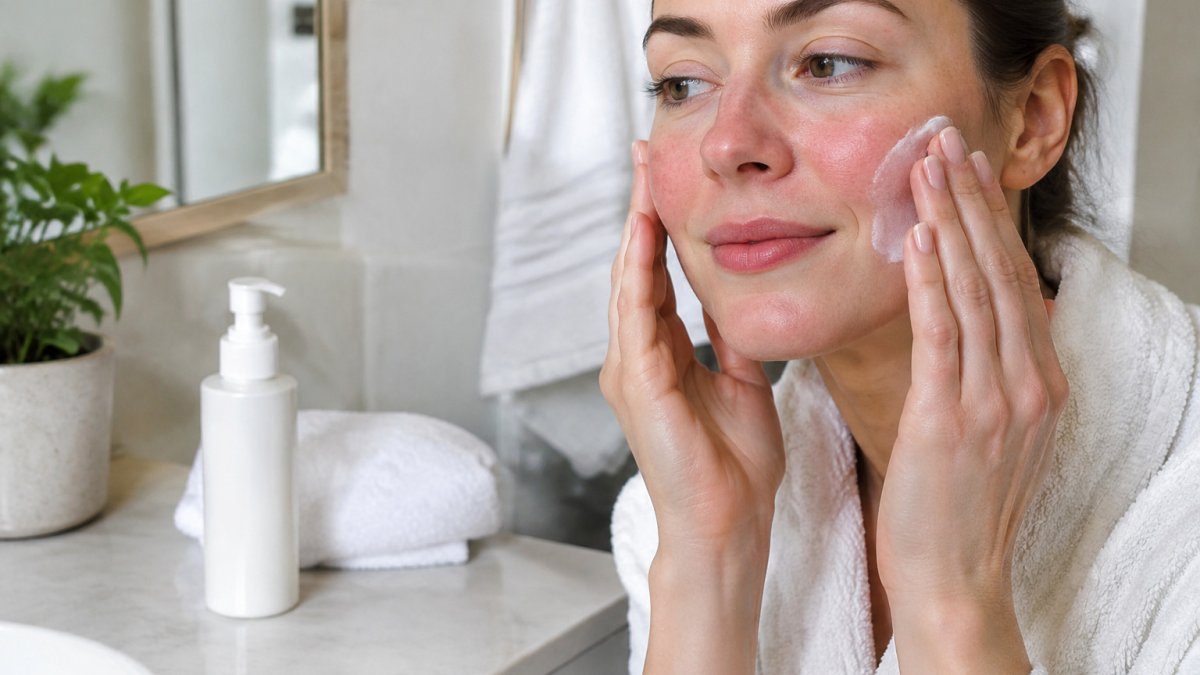
Morning
- Cleanse, or just rinse. If skin feels tight or stings after washing, plain lukewarm water is enough most mornings. Otherwise use a soothing gel balm for rosacea-prone skin, such as the product: Tolpa Dermo Face Rosacal Ar Soothing Cleansing Gel Balm. Massage for 20-30 seconds, then rinse with lukewarm water, hot water strips the barrier and drives flushing.
- Moisturise while skin is still slightly damp. A fragrance-free cream applied within a minute of cleansing locks in water and supports the barrier. The Bielenda Rose Care Moisturising Face Cream suits sensitive skin morning and evening. Use a pea-sized amount and press it in rather than rubbing.
- Protect in daylight. Sun exposure is a common trigger, so a gentle, fragrance-free sunscreen belongs in every morning routine, even on cloudy days. Choose a broad-spectrum product you tolerate and reapply outdoors.
Evening
- Cleanse to remove sunscreen and grime, using the same gentle balm and lukewarm water. Skip scrubs, cleansing brushes, exfoliating acids and anything labelled ‘purifying’ or ‘deep-cleansing’.
- Moisturise again with the same fragrance-free cream. If skin is very dry, a richer version of the same product is safer than adding a new serum.
How to choose products without guessing
- Look for short ingredient lists and the words ‘fragrance-free’ and ‘for sensitive skin’.
- Be cautious with alcohol high on the list, menthol, peppermint, eucalyptus, strong essential oils and high-strength exfoliating acids.
- Introduce one new product at a time and give it at least a week, reactions on rosacea skin are often delayed.
How to patch test safely
Apply a small amount to the inner forearm twice a day for three to five days. If there is no reaction, try a small area of the jawline for another few days before full-face use. Stop immediately if the skin reacts.
Watch out: Adding several new products at once makes it impossible to tell which one caused a flare, change one thing at a time and keep the rest of the routine stable.
The routine is built on three morning steps and two evening steps, summarised below.
| Step | What to do | Time or frequency |
|---|---|---|
| Cleanse or rinse | Lukewarm water, or a soothing gel balm if skin is tight | 20-30 seconds massage |
| Moisturise | Fragrance-free cream on slightly damp skin | Pea-sized amount, within a minute |
| Protect | Gentle, fragrance-free sunscreen, reapplied outdoors | Every morning, even cloudy days |
| Evening cleanse | Same gentle balm and lukewarm water | Once, to remove sunscreen |
| Evening moisturise | Same fragrance-free cream | Once each evening |
What to Do During an Acute Flare
A flare is not the moment to test new products or push active treatments. For the next few days, calm the skin, remove aggravators, and know when to stop managing it yourself.
Step 1, Strip back to basics. Pause exfoliants, retinoids, vitamin C, clay masks, cleansing brushes and any product started in the past two weeks. Keep only a gentle cleanser, a fragrance-free moisturiser and sunscreen outdoors.
Step 2, Remove obvious aggravators for a few days. Avoid hot drinks, alcohol, spicy food, hot showers, saunas and strenuous exercise that leaves the face flushed. Use lukewarm water and pat skin dry rather than rubbing.
Step 3, Soothe, don’t treat. A calming serum, such as the Apis Professional Rosacea Stop Face Serum, can help reduce visible redness, and a cooling anti-redness cream like the Bielenda Chestnut Calming Hydrating Capillary Skin Cream can be used on flushed areas. Apply sparingly, more product does not mean faster calming.
Step 4, Give it time. Most flares settle over several days to a couple of weeks once triggers are removed. If skin is no better after two weeks of a stripped-back routine, seek advice rather than keep swapping products.
Flare or allergy? Rosacea irritation usually brings redness, stinging, burning and dryness in the areas you normally flush. A product allergy more often causes itching, swelling, hives or a spreading rash, appearing within hours or up to a couple of days after use. If you suspect an allergy, stop the product and seek advice.
When to seek care during a flare
- Skin becomes swollen, weepy, crusted or painful
- Eyes feel gritty, dry, burning or sensitive to light, eye involvement is common in rosacea and needs assessment
- The flare follows a new medicine or product and is spreading
- Home care has not helped after a few weeks
Watch out: Layering several ‘calming’ products at once during a flare makes it harder to identify what helped and what hindered, keep the routine boring until the skin settles.
When to See a GP or Dermatologist About Prescription Treatment
Over-the-counter care helps many people but does not treat every case. A GP can review your symptoms and refer you to a dermatologist if needed.
Prescription options may include topical creams or gels, and sometimes oral medicines. Treatment usually takes several weeks to show results, so give it time and keep your GP informed. Medical review matters because prescription options may be needed.
Book an appointment if redness persists, your eyes feel irritated, or home care has not helped after a few weeks.
Looking for gentle options? Browse our range of products made for rosacea-prone skin and build a routine that suits your skin.
Frequently Asked Questions
How should I care for sensitive skin with rosacea?
Use a gentle, non-soap cleanser, a fragrance-free moisturiser and daily sun protection. Avoid rubbing or scrubbing the face, and use lukewarm rather than hot water. Introduce each new product one at a time so that any reaction is easier to trace. Because rosacea may need medical treatment as well as skin care, it is worth discussing persistent symptoms with a GP or dermatologist rather than relying on skin care alone.
Which triggers should I watch for with sensitive rosacea skin?
Common triggers include hot drinks, spicy food, alcohol, intense heat, cold wind, strenuous exercise and emotional stress. Keeping a simple trigger diary for a few weeks can show which factors seem to worsen your flushing or irritation. Many people find it helpful to remove one suspected trigger at a time rather than changing everything at once, so the effect of each change is clearer.
How long does rosacea treatment take to work?
Response times vary with the treatment chosen and how consistently it is used, so there is no single timeline that applies to everyone. A prescribed topical cream or gel may take several weeks to show a clear difference, and a clinician will usually want to review progress before changing treatment. If your skin is not improving, or is getting worse, book a review rather than stopping or switching treatments on your own.