
Last Updated: November 22, 2026
Quick Summary
Professional skincare for anti ageing pairs higher concentrations of proven actives, such as retinoids, peptides and acids, with buffering ingredients like ceramides, niacinamide and hyaluronic acid. Start with a low-strength retinoid twice a week at night and add one active at a time so your barrier stays stable.
- Introduce a low-strength retinoid twice a week at night, then build frequency over weeks.
- Apply products thinnest texture first and richest last, with sunscreen in the morning.
- Alternate acids on separate nights from retinoids rather than layering them together.
- Expect fine lines to soften over two to three months and firmness to change over six months.
- A starter kit needs one night serum, one moisturiser, one eye product and a sunscreen.
Table of Contents
- What Makes Professional Skincare Different for Anti Ageing
- How We Selected the Best Professional Skincare for Anti Ageing
- The Best Anti-Ageing Serum: What to Look For in a Formula
- Retinol Skincare Products: Strength, Timing and Tolerance
- How to Layer Anti-Ageing Skincare Without Irritation
- A Professional Skincare Routine for Mature Skin
- Realistic Timelines, Safety and When to Seek Advice
- Building Your Professional Anti-Ageing Kit with ProcosmeticsUK
- Frequently Asked Questions
What Makes Professional Skincare Different for Anti Ageing
Professional skincare for anti ageing is a category of formulas sold for trained use or advanced home routines, built around higher concentrations of proven actives. Professional lines tend to carry retinoids, peptides and acids at levels a general high-street moisturiser rarely reaches.
That concentration is the whole point, and also the risk. A formula that can visibly smooth fine lines and support collagen can also overwhelm a skin barrier that is not ready for it.
Brands such as Bielenda and Farmona are built around pairing strong actives with buffering ingredients such as ceramides, niacinamide and hyaluronic acid. It also means you need to read the label properly rather than assume every serum behaves the same way.
How We Selected the Best Professional Skincare for Anti Ageing
Ingredient evidence came first. Harvard Health on skincare for ageing skin notes that chemical exfoliation with topical products is generally a better route to anti-ageing benefits than physical scrubbing. That shaped which exfoliating and retinoid products made the cut.
The Best Anti-Ageing Serum: What to Look For in a Formula
The best anti-ageing serum is one that pairs a proven active with a delivery system your skin can handle, not simply the strongest percentage on the shelf. Look for three things: a named active, a supporting hydrator, and a short list of irritants.
| What to check | Why it matters | What to avoid |
|---|---|---|
| Named active | Tells you what is doing the work | Vague “anti-ageing complex” |
| Concentration | Sets strength and tolerance | Unlisted percentages |
| Barrier support | Reduces irritation risk | Alcohol-heavy formulas |
| Texture | Affects layering and comfort | Heavy, pilling gels |
| Packaging | Protects actives from light | Clear jars for retinoids |
Vitamin C and antioxidants suit morning use, while retinoids belong at night. A formula that combines retinol, vitamin C and collagen in one night serum, such as the Bielenda Super Trio Retinol Vit C Collagen night serum, covers several concerns at once. That convenience is real, but it also means you should introduce it slowly.
Retinol Skincare Products: Strength, Timing and Tolerance
Retinol skincare products work best when you start low, apply at night, and build frequency over weeks rather than days. Retinol is a vitamin A derivative that the skin converts into retinoic acid, the active form that speeds up cell turnover and supports collagen production over time. That conversion is why retinol is gentler than prescription tretinoin but also slower to show results, and why the strength you choose matters less than whether your skin can tolerate it consistently.
A common mistake is jumping straight to a high-strength formula every night. That is how people end up with redness, flaking and a barrier that takes a fortnight to recover. Begin twice a week, buffer with a moisturiser if your skin is dry, and increase only when the previous step feels settled.
If you want a dedicated night step, the Bielenda Skin Clinic Professional retinol lifting serum is built for exactly this slot in a routine. Apply it to clean, dry skin, then follow with moisturiser. Watch out: retinol and strong acids on the same night is a recipe for irritation, so alternate them, and do not layer a retinol serum with a vitamin C serum in the same evening.
Timing matters as much as strength. Retinol breaks down in daylight, so evening application protects the active and reduces photosensitivity the next day. If you are new to retinoids, a common pattern is to use one for two weeks, pause for a week if flaking appears, then resume at the same frequency rather than increasing. Signs that you should step back include persistent stinging, visible peeling beyond mild flaking, and a tight, shiny barrier that reacts to products that previously felt comfortable.
Pregnancy and breastfeeding are the clearest contraindication for retinoids. If you are pregnant, planning a pregnancy or breastfeeding, speak to a pharmacist, GP or dermatologist before using any retinol product, and ask about alternatives such as peptides and niacinamide. If you are using prescription actives for acne or rosacea, introduce retinol only with clinical advice, because stacking treatments can overwhelm the barrier.
How to Layer Anti-Ageing Skincare Without Irritation
Layering follows one rule: thinnest texture first, richest last. Cleanser, then serum, then eye product, then moisturiser, then sunscreen in the morning. Get that order right and most irritation problems disappear before they start.
Ingredient compatibility matters as much as order. Retinoids and alpha hydroxy acids compete for the same job and can over-exfoliate when stacked. Vitamin C and niacinamide sit together fine in modern formulas. Peptides play well with almost everything.
For the eye area, a gentle peptide serum is the safer choice than a strong retinoid, because the skin there is thin. The Bielenda Professional peptide firming eye serum fits neatly into a layered routine without competing with your face actives.
- Morning: antioxidant serum, moisturiser, broad-spectrum SPF
- Night: retinoid or peptide serum, then a ceramide moisturiser
- Alternate: acids on separate nights from retinoids
- Always: patch test anything new on the jawline first
A Professional Skincare Routine for Mature Skin
Mature skin needs the same core steps as any other skin type, just weighted toward hydration, firmness and barrier repair. The routine below is what we would build for someone managing fine lines, loss of firmness and dryness together, and it is sequenced so that each step supports the next rather than competing with it.
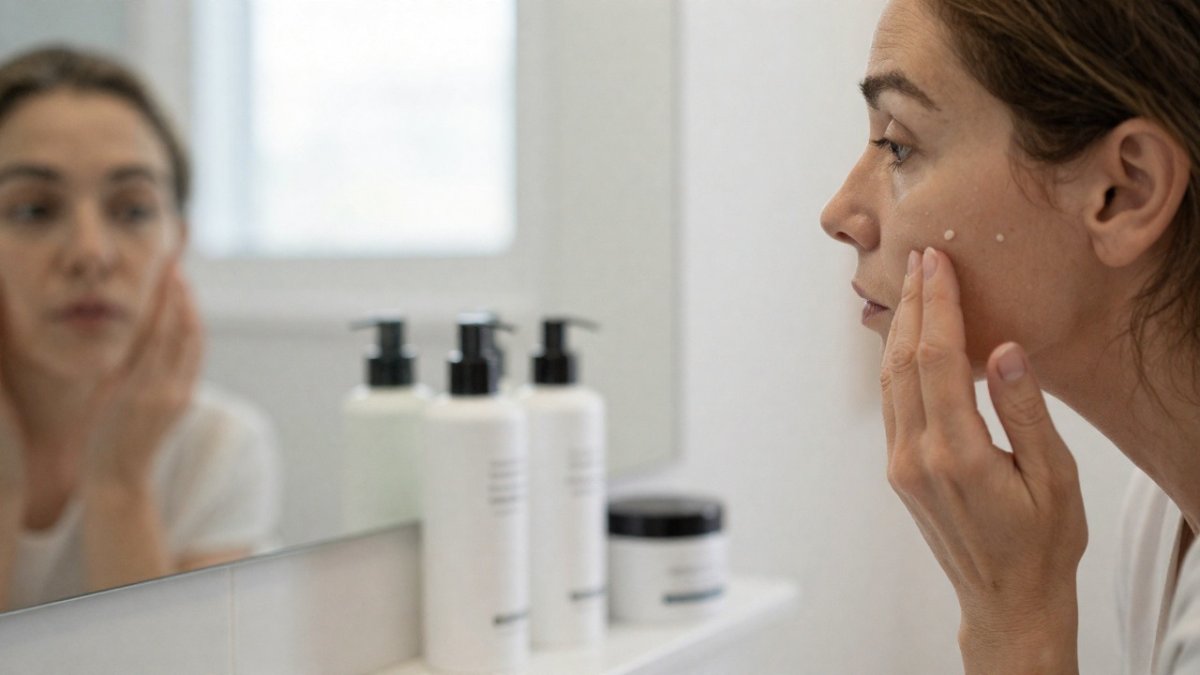
Start with a gentle cleanser, then a hydrating toner if your skin feels tight. Follow with a peptide or retinoid serum at night, and an antioxidant serum in the morning. Seal everything with a cream rich in ceramides and peptides, such as the Bielenda Professional Supremelab Pro Age peptide cream, which is formulated for mature skin.
Sunscreen is not optional. Daily broad-spectrum protection is the single most effective anti-ageing step, because photoaging from sun damage drives most visible lines and dark spots.
What separates a professional routine from an over-the-counter one is not the number of steps but the concentration and delivery of the actives, and the order in which they are introduced. Phase one is cleanse, moisturise and sunscreen for two weeks, so the barrier is stable before any active arrives. Phase two adds one active, usually a peptide serum in the morning and a low-strength retinoid at night, and holds for four weeks. Phase three adds a second active, such as an antioxidant or a gentle acid, only once the first feels settled.
Sequencing follows one rule: thinnest texture first, richest last. In the morning, that means cleanser, antioxidant serum, eye product, moisturiser, then sunscreen. In the evening, cleanser, retinoid or peptide serum, eye product, then a ceramide cream. If you use both a retinoid and an acid, alternate nights rather than layering them, and keep the acid step to two or three evenings a week.
Suitability changes the routine more than the products do. Dry or sensitive skin benefits from buffering the retinoid with moisturiser and choosing a cream texture over a gel. Oily skin can use lighter serums and a gel-cream moisturiser, but still needs barrier support because over-exfoliation can trigger rebound oiliness. Deeper skin tones should watch for post-inflammatory pigmentation after irritation, which is why gradual introduction and daily sunscreen matter even more; a formula that causes redness can leave a mark that outlasts the line it was meant to treat.
Consider cost per use before committing to a full kit. Pricing depends on product size, concentration and how often you use it, so check current prices and sizes on the ProcosmeticsUK website or request a quote.
Expect hydration and radiance to improve within a couple of weeks, fine lines to soften over two to three months, and firmness to change gradually over six months or more. Anyone promising faster is overselling. If you have a diagnosed skin condition, are pregnant, or are using prescription actives, speak to a pharmacist, GP or dermatologist before adding retinoids or acids.
Realistic Timelines, Safety and When to Seek Advice
Safety comes down to tolerance. Introduce one active at a time, keep a simple note of what you used and when, and stop if stinging persists beyond a few minutes. Sensitive or rosacea-prone skin should start with the lowest strength available and buffer generously.
If you have a diagnosed skin condition, are pregnant, or are using prescription actives, speak to a pharmacist, GP or dermatologist before adding retinoids or acids.
Building Your Professional Anti-Ageing Kit with ProcosmeticsUK
The simplest way to start is a small, focused kit rather than a full shelf. One night serum, one moisturiser, one eye product and a sunscreen covers the essentials, and you can add a lifting serum such as Farmona Professional Filler Lifting face serum once your routine feels stable.
ProcosmeticsUK stocks a selection of professional skincare brands, including Bielenda, Apis and Farmona. Trade account access is available for professional-only products. Whether you run a salon, work freelance or are training on a beauty course, you can register to find out which products and account options suit you.
Dedicated customer support can help you with questions before you order. Register with ProcosmeticsUK to get started.
Choosing the right professional formulas is easier when someone who knows the category helps you narrow it down. ProcosmeticsUK supplies genuine Bielenda, Apis and Farmona products, gives trade account holders access to professional-only lines and discounts, and offers support to help you match a formula to your skin. Get started with ProcosmeticsUK and build an anti-ageing routine you can trust.
Frequently Asked Questions
What is the best professional skincare for anti-ageing?
There is no single best product; the right professional skincare depends on your skin concerns, sensitivity and routine. Look for formulas built around proven actives such as retinoids, vitamin C, peptides, hyaluronic acid and ceramides. Professional ranges often use higher concentrations and more targeted delivery than high-street products. Start with one active, introduce it gradually, and pair it with broad-spectrum SPF every morning to protect results.
Can professional skincare reduce the appearance of fine lines and wrinkles?
Professional skincare can visibly improve fine lines, texture and radiance over time, especially with retinoids, antioxidants and hydrating ingredients. Results build gradually: hydration and glow often improve within weeks, while firmness and line depth may take several months of consistent use. Pairing actives with daily SPF is essential, because unprotected sun exposure undermines collagen and accelerates photoaging.
Should I use retinol and vitamin C in the same routine?
You can use both, but timing matters. Vitamin C works well in the morning under sunscreen, while retinol is best applied at night. Layering them in the same application can increase irritation, particularly on sensitive skin. If you want to use both in one session, apply vitamin C first, wait a few minutes, then follow with a low-strength retinol and a barrier-supporting moisturiser. Reduce frequency if stinging or redness appears.
How long does it take for anti-ageing skincare to work?
Timelines vary by ingredient and skin type. Hydration, smoothness and glow can improve within two to four weeks. Retinoids often take several weeks to months to show visible changes in texture and fine lines. Consistency and sun protection matter more than switching products often. If irritation persists or your concerns are medical, speak to a qualified skincare professional or dermatologist.

